

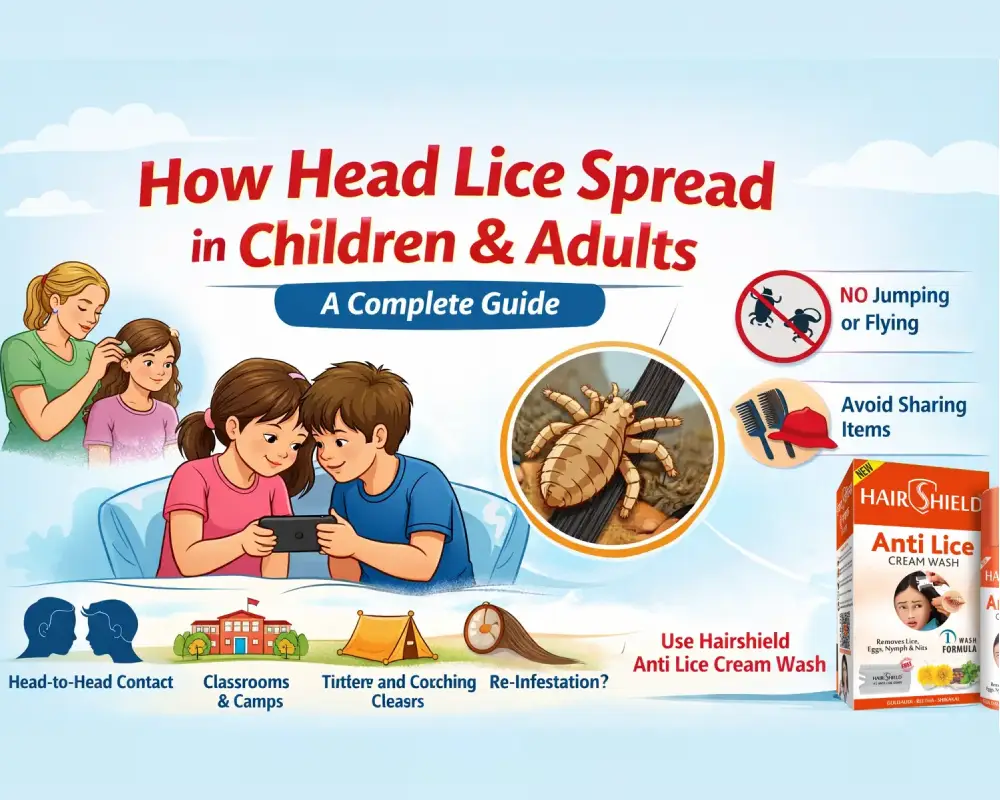
“How are head lice spreading so easily even after treatment?”
The good
news? Head lice spread in very predictable ways. Once you understand how it
happens, it becomes much easier to stop lice from spreading and prevent them
from coming back.
Let’s
talk about it - parent to parent.
How Do Head Lice Spread?
Head lice
spread mainly through direct head-to-head contact.
That
means when your child’s hair touches another child’s hair even for a few
seconds, lice can crawl from one head to the other. They don’t jump, fly, or
fall from the air. They simply crawl.
And
here’s something every parent should know:
👉 Head lice have nothing to do with dirt or poor
hygiene.
Clean
hair, oily hair, short hair, long hair, lice don’t care. Many of the common
beliefs around lice are myths. (You can read more about this in our blog What
Causes Head Lice: Myths vs Facts.)
Why Are Children More Likely to Get Head Lice?
Children
get head lice more often because of how they naturally play and interact.
Think
about a normal school day:
All these
moments involve close contact, which makes it easy for lice to spread without
anyone noticing.
How Do Adults Catch Head Lice?
Most
adults get head lice from their children.
Parents
and caregivers are in close contact while:
Teachers,
day-care workers, and childcare providers may also be at higher risk because
they work closely with children every day.
Can Head Lice Jump or Fly?
NO this
is a big myth.
Head lice
cannot jump, fly, or hop like fleas. They only crawl, and they crawl
slowly. That’s actually good news because it means lice spread can be reduced
by avoiding direct head-to-head contact as much as possible.
Common Places Where Head Lice Spread Easily
Head lice
spread faster in places where children (and sometimes adults) stay close
together for long periods, such as:
If one
child gets lice, it’s easy for others around them to be exposed.
Can Sharing Combs, Hats, or Pillows Spread Head
Lice?
Sharing
personal items is less common, but yes it can happen, especially if
items are shared right after use.
Be
cautious with:
Lice
don’t survive long away from the scalp, which reduces the risk—but avoiding
sharing these items is still a good habit.
How Long Can Head Lice Live Without a Human Scalp?
Head lice
usually survive only 24 to 48 hours without a human scalp.
They need
warmth and blood to stay alive. Without that, they weaken quickly. This is why
lice mainly spread through people, not through sofas, carpets, or
household surfaces.
How to Stop Head Lice from Spreading?
Here are
some practical, parent-approved steps that really help:
Catching
lice early makes a huge difference.
Why Do Head Lice Keep Coming Back?
If lice
seem to return again and again, it’s usually because:
This
doesn’t mean you did something wrong, it just means lice are stubborn.
Follow-up checks and a complete routine are key to preventing re-infestation.
Easier Lice Control with Hairshield Anti Lice Cream
Wash
When
you’re dealing with head lice in children, you want something that works fast
but is still gentle.
Hairshield
Anti Lice Cream Wash helps:
Using a
targeted lice treatment along with proper combing and follow-up checks can
greatly reduce repeat infestations and make the process easier for the whole
family.
Head lice spread through close human contact not because of
dirt, pets, or bad hygiene. Once you understand how lice actually spread, it
becomes much easier to prevent them and stop the cycle.
With awareness, a few simple habits, and the right treatment, head lice
don’t have to take over your home or your peace of mind.
You’ve got this 💛



 Home
Home
 WhatsApp
 Call Now